
Call (402) 624-4806
Skip to main content
SIDING SPECIFICATION REGISTER

Siding Repair in Omaha, NE

Siding Repair in Omaha, NE starts with the wall you have, not a package chosen in advance. Omaha Siding Repair Pros discusses cracked courses, loose panels, softened wood and storm marks in terms of material, access and the layers behind the face. Start with the cost context below, then compare the work that fits what you can see.

Call (402) 624-4806Call to check availability
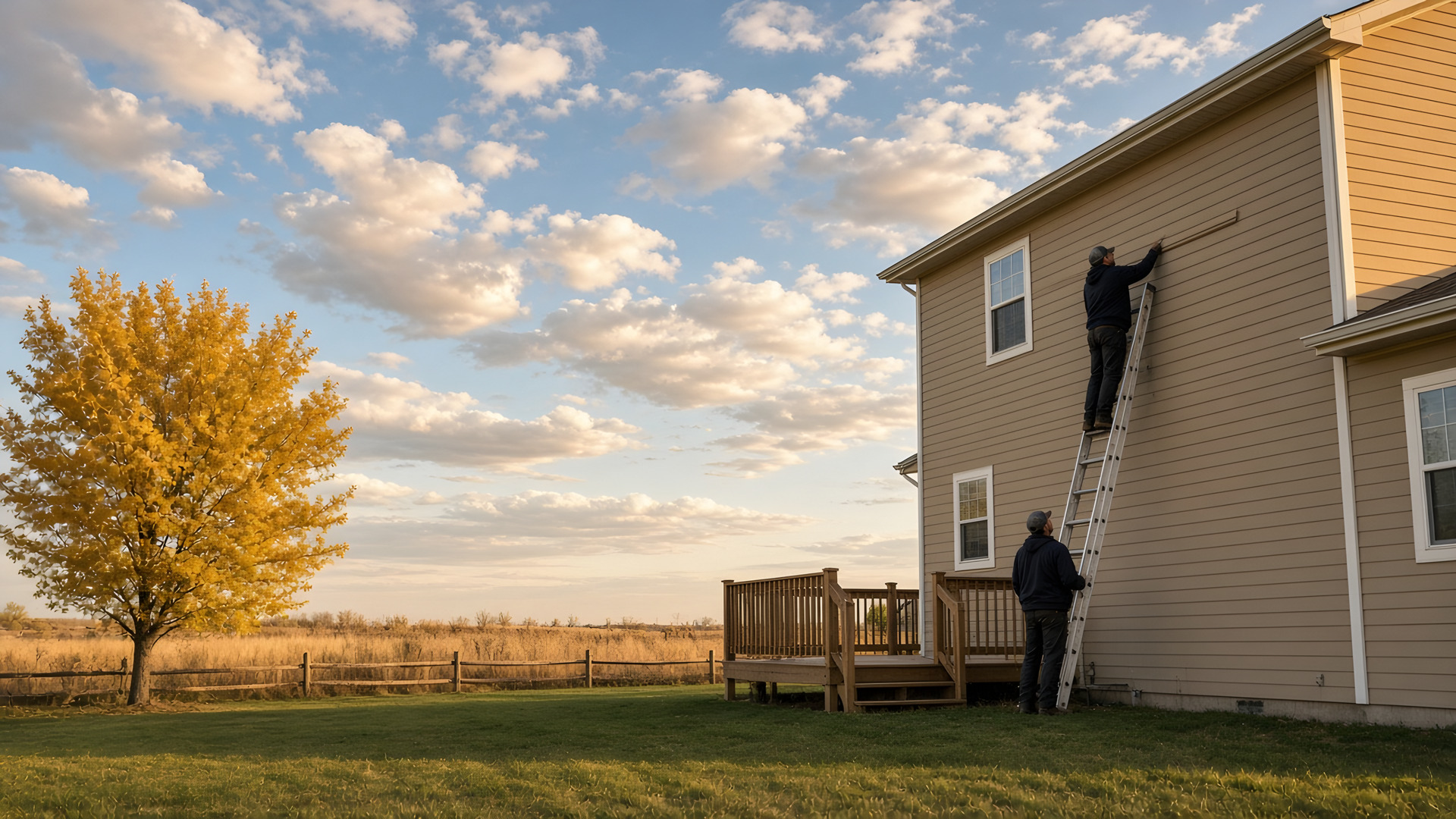
Two people handling siding beside a tan two-story house under a broad autumn sky.

Existing siding / material, access, wall layers

MEASURED COST DEFINITIONS

Cost before commitment

Visible damage is only the starting measurement. These are broad national planning figures inherited from cost-guide research, not Omaha quotes or a price list.

Repair visit
Often roughly $370 to $1,500material, access and matching determine the scope.
Full replacement
Often roughly $5,600 to $17,700area, material, removal and hidden wall conditions affect the figure.

A repair visit often roughly falls between $370 and $1,500, depending on material, access, matching and the amount being opened. A short course at ground level and an upper-wall corner detail do not involve the same work.

Full siding replacement often roughly falls between $5,600 and $17,700 in broad national guides, depending on wall area, material, removal and concealed conditions. That is a different scale of project, not an upper limit for every house.

Scope Caution & Planning

Keep visible siding work separate from unknown wall conditions. Ask what the written scope includes for trim, wrap and flashing, and how further findings are discussed before the scope changes.

SPECIFICATION INDEX

Material and work index

A crack, a dent and a swollen board should not be treated as interchangeable. Use the work index to compare the visible condition with the part of the wall that needs attention.

Scroll table horizontally →

Material and work index
Wall conditionWork to discussScope note
Cracked, loose or missing coursesPanel repairCheck lock edges, attachment and the exposed backing.
Wavy or split vinylVinyl repairCheck movement and profile compatibility.
Soft or split clapboardsWood repairTrace repeated wetting and assess cut ends.
Widespread face damageReplacementCompare removal boundaries and wall-layer work.
Dents, cracks or displaced trim after weatherStorm and hail workRecord material condition on each affected face.
PROCEDURAL REGISTER

A visit in three entries

A useful conversation ends with a defined scope, not a guess based on a distant photograph.

  1. 01 / LOOK

    Look at the face and edges

    Describe the material and affected walls. The on-site assessment checks the visible pieces, trim and access, while noting what cannot yet be seen behind the siding.

  2. 02 / SCOPE

    Write the boundaries

    The proposed work separates panel or board replacement from flashing, wrap, trim and any allowance for concealed damage. Matching limits and finish differences belong in that discussion.

  3. 03 / FIT

    Fit the material to the wall

    Compatible pieces and attachment details are selected for the conditions found. If opening reveals additional damage, discuss the changed scope before extending the work.

TECHNICAL MEMORANDUM

The wall behind the lap

Siding is the visible rain-shedding layer. It is not the entire water-management system.

Behind the courses, wrap and flashing form a drainage path. A sound-looking patch does little for a torn or poorly lapped layer left behind it. Window edges, corners and transitions deserve attention while a damaged section is open.

Vinyl needs room to move through Omaha's temperature changes. Tight attachment can show up as waviness or courses lifting out of their locks. Cold material can be brittle, and concentrated reflected heat can also distort vinyl. The cause should be considered along with the piece itself.

Wood repairs involve both material condition and the wetting pattern. A new board placed over softened backing or under a recurring drip inherits the same problem. Cut ends and the chosen finish need to be considered together.

Nebraska's hail season often concentrates in late spring through midsummer, as noted in University of Nebraska—Lincoln hail guidance. Metal can dent, vinyl can crack and trim can loosen. Those are different material responses; none proves the condition of every layer behind the siding.

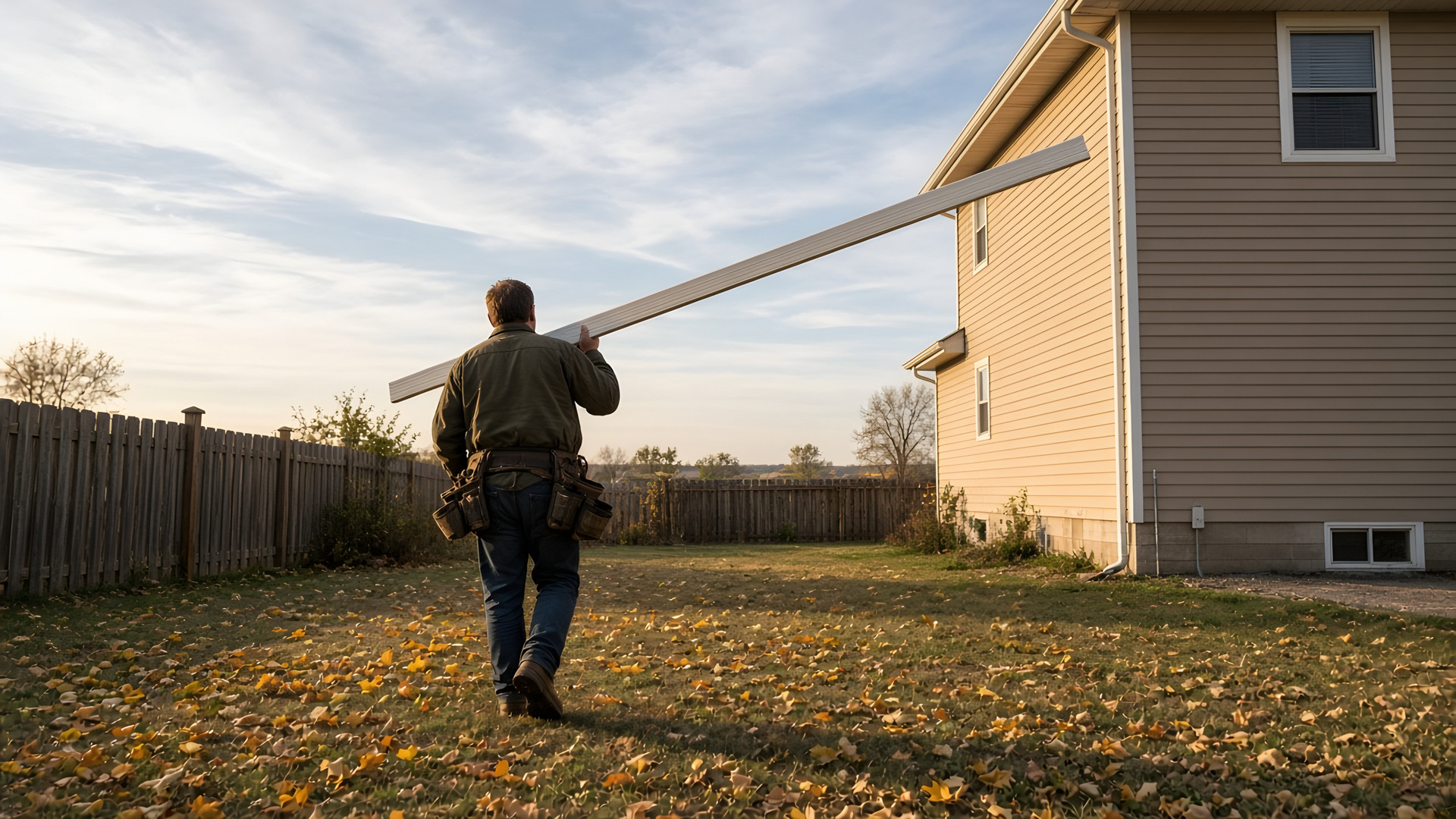
Panel handling beside an Omaha-area house; illustrative supplied image.

GEOGRAPHIC COVERAGE

Metro place entries

Omaha is the starting point. Call about the property location and proposed scope for these surrounding communities; the town name alone does not establish the material or condition.

Bellevue, NE

Bellevue is in Sarpy County on the Nebraska side of the Missouri River. Its mix of existing houses can bring different panel profiles and trim transitions into the same repair conversation. Confirm local permit requirements with Bellevue rather than relying on Omaha guidance.
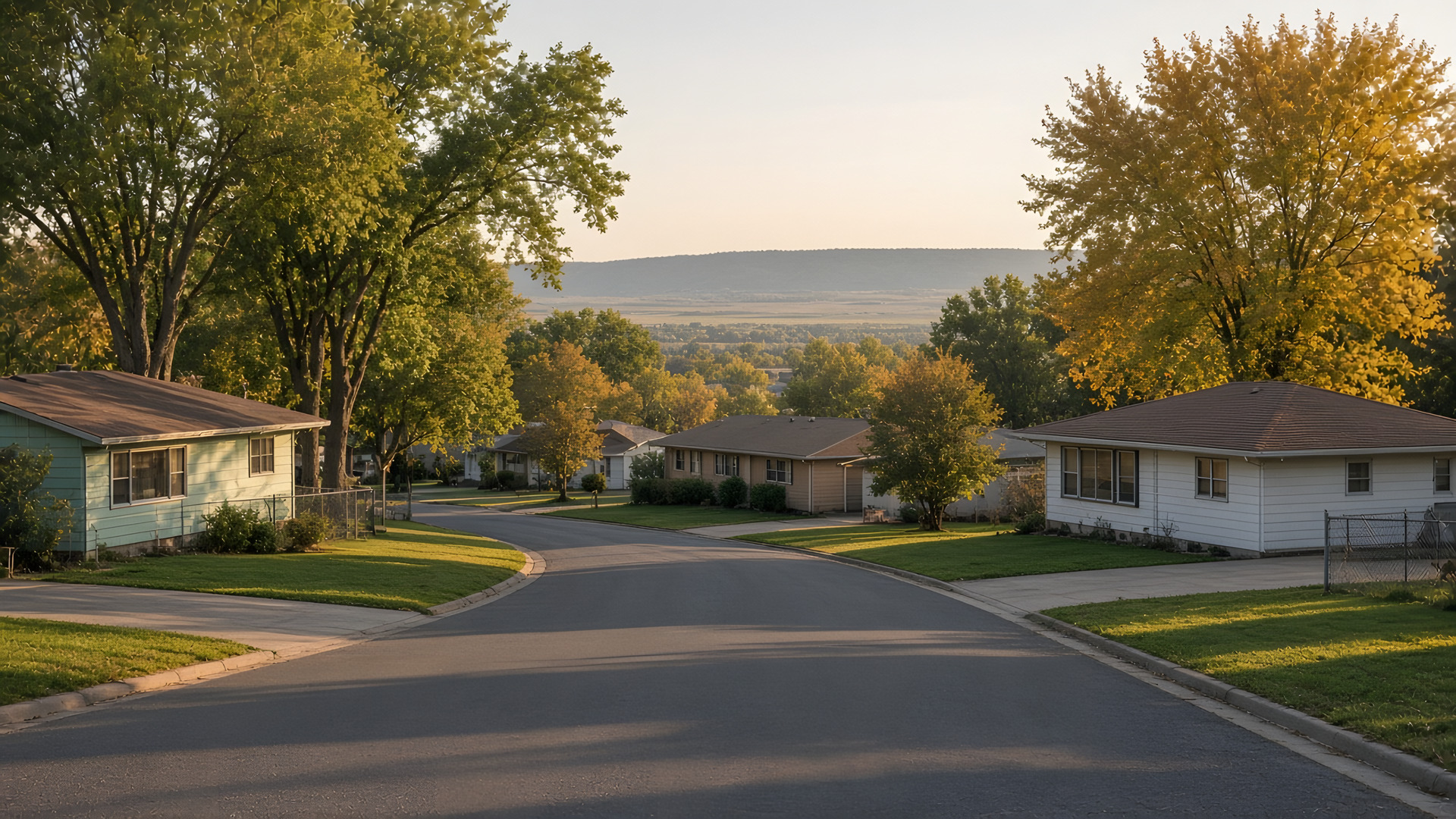
Curving street of ranch houses beneath autumn cottonwoods in Bellevue.

Papillion, NE

Papillion is the Sarpy County seat. Existing vinyl courses, corners and porch transitions may call for a profile check before new pieces are selected. Ask about the actual wall and confirm permit requirements with Papillion for the proposed work.

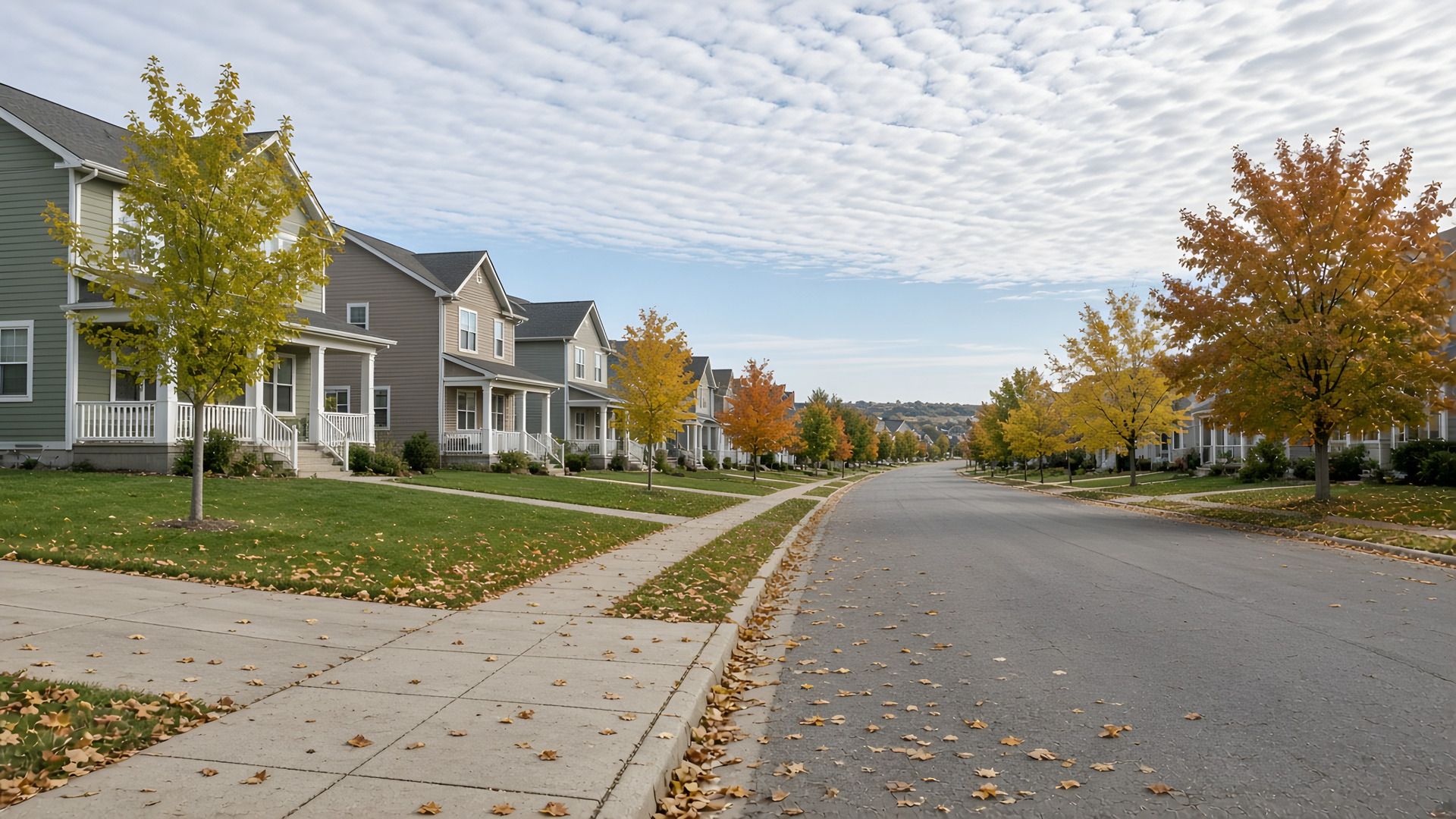
Street of two-story siding-clad houses and young autumn trees in Papillion.

Council Bluffs, IA

Council Bluffs is across the Missouri River in Iowa, with older frame houses among its varied streets. A wood-board repair may involve joints and finish as well as the damaged length. Iowa-side properties follow the applicable local requirements; confirm the proposed work with Council Bluffs.

Gabled frame houses above retaining walls and steps in Council Bluffs.

SPECIFICATION INQUIRIES

Questions before opening the wall

These answers explain scope and material limits. They do not replace a look at the actual wall.

Yes. A small visible break can expose torn wrap or softened sheathing once the siding is opened. The initial scope should separate the visible panel work from any concealed damage. Ask how a change in scope will be described and approved before more material comes off.

A replacement can fit the profile without matching the aged colour exactly. Sun exposure, discontinued profiles and material thickness all affect the result. Discuss a small patch, reuse of sound material from a less visible wall, or a wider replacement area before choosing the finish.

Cold vinyl can be brittle, so handling and installation conditions matter. A panel that tolerates flexing in mild weather can crack when it is cold. Ask about material condition, access and suitable work conditions rather than assuming the same method fits every day.

Confirm the proposed work with the City of Omaha Permits and Inspections. Material replacement, changes to a wall assembly and the size of the project can affect what must be checked. Use the applicable city office for properties outside Omaha; do not assume one city's answer applies everywhere.

Access, panel profile, matching material, trim and the condition behind the siding can matter more than the visible patch size. A repair visit often roughly falls in a national planning range of $370 to $1,500, but a local written scope is needed to price a particular wall. Concealed damage or broader replacement changes that scope.
DIRECT TRANSMISSION

Put the wall into words

Tell Omaha Siding Repair Pros what is cracked, loose, dented or softened, and which side of the house is affected. Call to check availability. No online request form is needed.

Call (402) 624-4806Call to check availability